Chest discomfort is one of the most alarming sensations a person can experience. When a sharp pain or a heavy pressure radiates through the torso, the mind often jumps to the most life-threatening possibility: a heart attack. However, many people are surprised to learn that gastrointestinal issues, specifically Silent Reflux or GERD, can mimic these symptoms with startling accuracy.
At Digestive & Liver Disease Consultants, P.A., we believe that understanding your body is the first step toward effective treatment and peace of mind. Distinguishing between silent reflux symptoms and heart attack warning signs is not just about comfort; it is about knowing when to call for help and when to schedule a specialist consultation.
Understanding Silent Reflux (LPR)
While most people associate acid reflux with the burning sensation of heartburn, Silent Reflux, medically known as Laryngopharyngeal Reflux (LPR), is far more subtle. Unlike traditional GERD, LPR often occurs without any noticeable chest burning. Instead, stomach acid travels up the esophagus and reaches the throat or larynx, causing irritation that can be easily misidentified.
Common Silent Reflux Signs
- Chronic Throat Clearing: A persistent feeling of needing to clear your throat, especially after meals.
- Sore Throat or Hoarseness: Persistent irritation that doesn't stem from a cold or flu.
- A "Lump" in the Throat: Known as globus pharyngeus, this is the sensation that something is stuck in your throat.
- Chronic Cough: A dry, nagging cough that often worsens when lying down.
- Difficulty Swallowing: A sensation that food is moving slowly or getting caught.
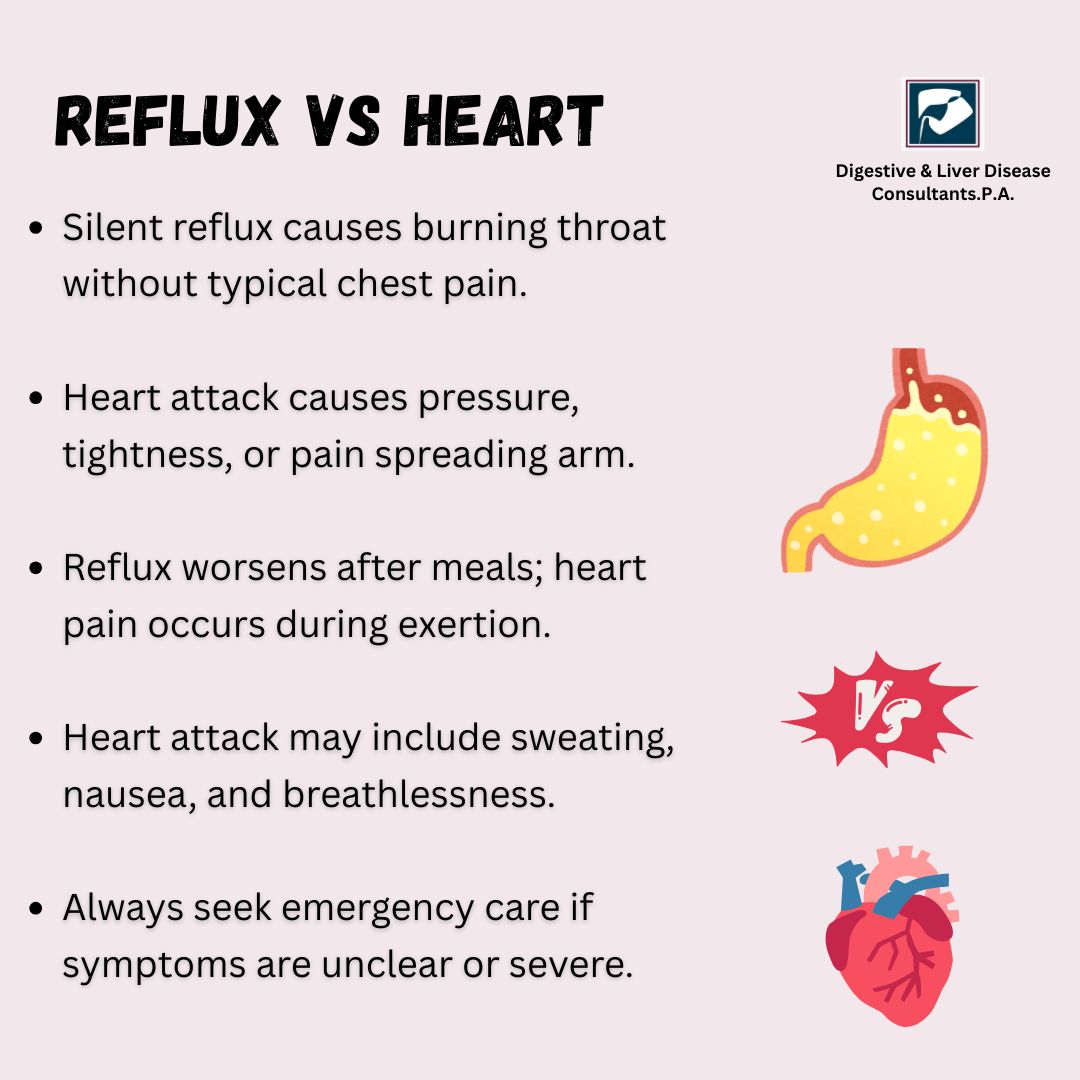
Identifying Heart Attack Warning Signs
A heart attack occurs when the blood flow to a part of the heart is blocked. The symptoms can be sudden and intense, but they can also be gradual and mild. It is critical to recognize that atypical heart attack symptoms—such as nausea, jaw pain, or extreme fatigue—are more common in women and individuals with diabetes.
Critical Emergency Signs of a Heart Attack
- Pressure or Fullness: A feeling of an elephant sitting on your chest.
- Radiating Pain: Pain that moves into the left arm, neck, jaw, or back.
- Shortness of Breath: Difficulty breathing, often occurring before or during chest discomfort.
- Cold Sweats: Breaking out in a clammy, cold sweat without physical exertion.
- Lightheadedness: Feeling dizzy or as though you might faint.
Comparing the Pain: Reflux vs. Cardiac Pain
Distinguishing between GERD vs heart attack symptoms requires paying close attention to the triggers and the nature of the discomfort.
| Feature | Silent Reflux / GERD | Heart Attack |
| Location | Mid-chest, moving upward toward the throat. | Center or left side of the chest; radiates to the arm/jaw. |
| Triggers | Occurs after eating, especially spicy or fatty foods. | Often triggered by physical exertion or emotional stress. |
| Movement | Often worsens when lying flat or bending over. | Does not typically change with posture. |
| Relief | May improve with antacids or water. | Does not improve with antacids; requires medical intervention. |
| Accompanying Signs | Sour taste in the mouth or "wet" burps. | Profuse sweating, nausea, and shortness of breath. |
When Chest Pain is Serious
If you are ever in doubt about the difference between GERD and heart attack symptoms, you must seek emergency care. Medical professionals would much rather treat a case of severe reflux than have a patient stay home during a cardiac event.
You should seek immediate emergency assistance if:
- The pain feels like crushing pressure or squeezing.
- The discomfort is accompanied by extreme weakness or a rapid, irregular pulse.
- The pain persists for more than 10 to 15 minutes and does not respond to position changes.
- You have a history of heart disease, high blood pressure, or high cholesterol.
The Danger of Reflux Misdiagnosis
While the fear of a heart attack is paramount, ignoring chronic reflux symptoms can lead to long-term health complications. When stomach acid frequently enters the esophagus and throat, it can cause:
Esophagitis: Inflammation and scarring of the esophageal lining.
Barrett’s Esophagus: A precancerous change in the lining of the esophagus.
Strictures: Narrowing of the esophagus that makes swallowing difficult.
Respiratory Issues: Chronic reflux can exacerbate asthma or lead to recurrent pneumonia.
Why Choose Digestive & Liver Disease Consultants, P.A.?
Navigating the complexities of chest discomfort causes requires an expert touch. At Digestive & Liver Disease Consultants, P.A., we provide comprehensive diagnostic and treatment plans tailored to your specific needs.
Expert Diagnostic Capabilities
Our facility is equipped with the latest technology to determine if your symptoms are gastrointestinal. From pH monitoring to upper endoscopies, we look beyond the surface to find the root cause of your discomfort.
Board-Certified Specialists
Our team consists of highly trained gastroenterologists who specialize in managing complex cases of GERD and LPR. We understand that "silent" symptoms are just as impactful as obvious ones, and we treat every patient with the investigative rigor they deserve.
Integrated Care Approach
We don't just treat symptoms; we treat people. Our consultants work closely with you to adjust lifestyle factors, diet, and medication. If your chest pain is indeed reflux-related, we provide a clear roadmap to recovery that prevents future scares and improves your quality of life.
Focus on Preventive Health
By addressing acid reflux chest pain early, we help prevent the progression of the disease into more serious conditions like Barrett's Esophagus or esophageal cancer. We believe in proactive medicine that keeps you out of the emergency room.
Conclusion
Distinguishing between a digestive issue and a cardiac emergency can be difficult, as both can present with significant chest discomfort. While silent reflux is not life-threatening in the immediate sense, its ability to mimic heart attack symptoms causes unnecessary stress and indicates underlying damage to your digestive system.
If you have experienced recurring chest pain that your cardiologist has ruled as non-cardiac, it is time to look at your digestive health. Understanding the reflux vs. cardiac pain distinction is the first step toward a healthier, more comfortable life.
Take Control of Your Digestive Health
Don't live with the uncertainty of chronic chest discomfort. If you are struggling with silent reflux symptoms or persistent acid reflux chest pain, the specialists at Digestive & Liver Disease Consultants, P.A. are here to help.
Contact us today to schedule your consultation and get the clarity you deserve.