Swallowing is something most people never think about until it becomes difficult. If food feels stuck, liquids go down the wrong way, or swallowing starts to hurt, it is easy to brush it off as temporary. Here’s the thing. Trouble swallowing, known medically as dysphagia, is not something to ignore. In some cases, it can signal serious underlying conditions that need prompt medical attention.
Dysphagia can affect people of all ages and may develop suddenly or gradually over time. Understanding when swallowing problems are harmless and when they become dangerous can protect your health and, in some cases, save your life.
What Is Dysphagia?
Dysphagia refers to difficulty swallowing food, liquids, or saliva. It can occur at different stages of swallowing and may involve the mouth, throat, or esophagus.
Swallowing is a complex process involving nerves, muscles, and coordination. When any part of this process is disrupted, swallowing becomes difficult or unsafe.
Common Symptoms of Dysphagia
Dysphagia does not always feel the same for everyone. Common symptoms include
- Feeling like food is stuck in the throat or chest
- Pain while swallowing
- Coughing or choking during meals
- Frequent throat clearing
- Regurgitation of food
- Unexplained weight loss
- Recurrent chest discomfort after eating
These symptoms may appear occasionally or worsen over time.
Common Causes of Trouble Swallowing
Acid Reflux and GERD
Chronic acid reflux can irritate and damage the lining of the esophagus. Over time, this inflammation may lead to narrowing of the esophagus, making swallowing difficult.
Symptoms often include heartburn, sour taste in the mouth, and chest discomfort along with dysphagia.
Esophageal Strictures
An esophageal stricture is a narrowing of the esophagus caused by scarring. This can result from long term acid reflux, radiation therapy, or previous surgeries.
Patients often notice that solid foods are harder to swallow than liquids.
Esophageal Rings and Webs
These are thin tissue growths that partially block the esophagus. They can cause intermittent swallowing difficulty, especially with solid foods.
Neurological Disorders
Conditions such as stroke, Parkinson’s disease, multiple sclerosis, and dementia can interfere with the nerves and muscles involved in swallowing.
In these cases, dysphagia may increase the risk of food or liquids entering the airway.
Infections and Inflammation
Certain infections or inflammatory conditions can cause swelling and pain in the throat or esophagus, making swallowing uncomfortable or unsafe.
Esophageal Cancer
One of the most serious causes of dysphagia is esophageal cancer. Difficulty swallowing that gradually worsens, especially when accompanied by weight loss or chest pain, should never be ignored.
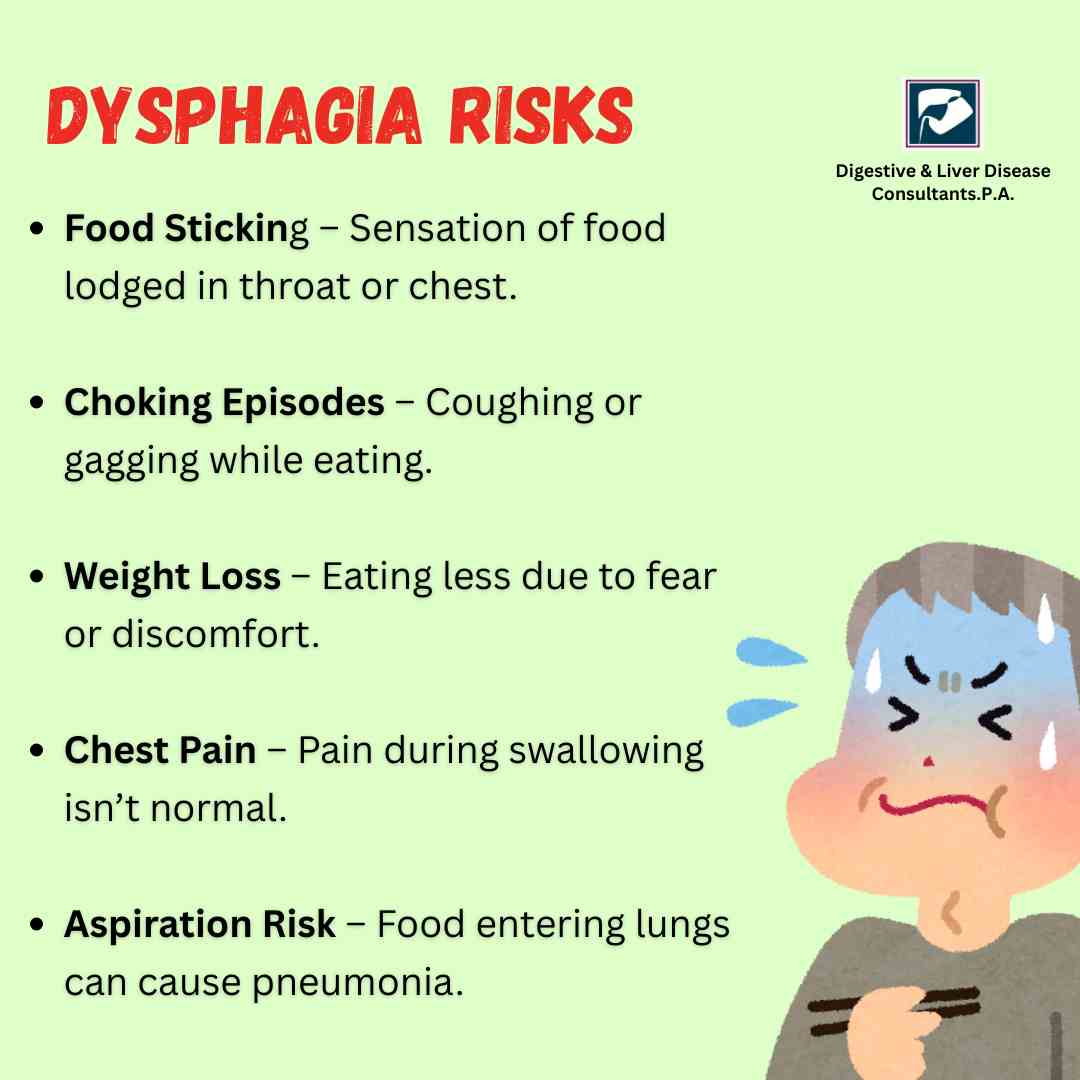
When Does Dysphagia Become Dangerous?
Occasional difficulty swallowing may not be serious. However, dysphagia becomes dangerous when it increases the risk of complications or signals a severe underlying condition.
Aspiration Risk
When food or liquids enter the airway instead of the esophagus, it can lead to aspiration. This increases the risk of aspiration pneumonia, especially in older adults or people with neurological conditions.
Warning signs include coughing during meals, wet sounding voice, or frequent chest infections.
Malnutrition and Dehydration
Difficulty swallowing can cause people to eat less or avoid certain foods altogether. Over time, this can lead to malnutrition, dehydration, weakness, and poor immune function.
Esophageal Obstruction
Food getting stuck in the esophagus can cause severe chest pain, vomiting, and the inability to swallow even saliva. This is a medical emergency and requires immediate care.
Underlying Serious Disease
Progressive or persistent dysphagia may be a sign of cancer, severe reflux damage, or advanced neurological disease. Early diagnosis improves treatment outcomes.
Warning Signs That Require Immediate Medical Attention
Seek medical care promptly if you experience
- Difficulty swallowing that worsens over time
- Painful swallowing
- Unexplained weight loss
- Persistent chest pain after eating
- Frequent choking or coughing during meals
- Vomiting blood or black stools
These symptoms should never be ignored.
How Dysphagia Is Diagnosed?
Accurate diagnosis is essential to determine the cause and severity of dysphagia. Doctors may recommend
- Detailed medical history and physical examination
- Upper endoscopy to view the esophagus
- Barium swallow study
- Esophageal motility testing
- Imaging studies if needed
These tests help identify structural problems, inflammation, or muscle coordination issues.
Treatment Options for Dysphagia
Treatment depends on the underlying cause and severity of symptoms.
Common approaches include
- Medications to reduce acid reflux or inflammation
- Endoscopic procedures to widen narrowed areas
- Dietary modifications and texture changes
- Swallowing therapy with trained specialists
- Treatment of underlying neurological or inflammatory conditions
Early treatment often prevents complications and improves quality of life.
Living Safely With Swallowing Difficulties
If you experience ongoing swallowing issues, simple adjustments can help reduce risk
- Eat slowly and chew thoroughly
- Avoid lying down immediately after meals
- Take small bites and sips
- Follow dietary recommendations from your doctor
- Attend regular follow up appointments
These steps support safer swallowing but do not replace medical evaluation.
Why Choose Digestive & Liver Disease Consultants, P.A.?
Trouble swallowing requires expert evaluation and a careful approach. Digestive & Liver Disease Consultants, P.A. offers specialized care for patients experiencing dysphagia and other digestive disorders.
Why patients choose our team
- Board certified gastroenterologists with extensive experience
- Advanced diagnostic testing including endoscopy
- Personalized treatment plans based on individual needs
- Focus on early detection and prevention of complications
- Compassionate, patient centered care
We take swallowing difficulties seriously and work to identify the cause quickly and accurately.
Conclusion
Dysphagia is more than an inconvenience. While mild swallowing problems may seem harmless, persistent or worsening symptoms can become dangerous if left untreated. From aspiration and malnutrition to serious underlying diseases, the risks are real.
Paying attention to early warning signs and seeking expert care makes a significant difference. The sooner dysphagia is evaluated, the better the outcome.
Consult Our Top Gastro Specialists
If you or a loved one is experiencing trouble swallowing, do not delay care. Consult our top gastro specialist at Digestive & Liver Disease Consultants, P.A. for expert evaluation, accurate diagnosis, and effective treatment. Schedule your appointment today and take a confident step toward safer swallowing and better digestive health.