Modern digestive care relies on advanced diagnostic tools that help doctors identify problems early and treat them effectively. Two important advanced endoscopy procedures used in gastroenterology are ERCP procedure and EUS endoscopic ultrasound. These techniques help specialists diagnose and treat conditions affecting the pancreas, bile ducts, gallbladder, and surrounding digestive organs.
Understanding how these procedures work and why they are recommended can help patients feel more confident about their care.
What Is ERCP?
The ERCP procedure, short for Endoscopic Retrograde Cholangiopancreatography, is a specialized technique used to examine and treat problems in the bile ducts and pancreatic ducts. It combines endoscopy and X ray imaging to provide detailed views of the digestive system.
During an ERCP test for bile duct issues, a flexible tube called an endoscope is inserted through the mouth and guided into the stomach and small intestine. A contrast dye is then injected into the bile ducts and pancreatic ducts so that they can be clearly seen on imaging.
This procedure allows doctors to both diagnose and treat certain conditions during the same session.
Why ERCP Is Performed?
Doctors recommend ERCP when there is suspicion of blockage or disease affecting the bile or pancreatic ducts.
Common reasons include:
- ERCP for gallstones trapped in the bile duct
- Bile duct blockage treatment
- Narrowing or strictures in bile ducts
- Infection of the bile ducts
- Pancreatic duct abnormalities
- Complications after gallbladder surgery
ERCP is particularly useful because it allows doctors to remove stones, place stents, or open blocked ducts during the procedure.
What Is EUS (Endoscopic Ultrasound)?
EUS endoscopic ultrasound is another important tool used in modern digestive care. It combines traditional endoscopy with ultrasound imaging to produce highly detailed pictures of the digestive tract and nearby organs.
During the endoscopic ultrasound procedure, a thin flexible tube with a small ultrasound probe at its tip is passed through the mouth into the digestive tract. The ultrasound waves create high resolution images of the pancreas, bile ducts, stomach, and surrounding tissues.
The EUS test for pancreas conditions is particularly valuable because it can detect small abnormalities that may not be visible with other imaging methods.
Why EUS Is Recommended?
EUS plays a major role in diagnosing complex digestive conditions.
Doctors commonly use EUS for:
- Pancreatic disease diagnosis
- EUS for pancreatic cancer detection
- Evaluating tumors in the digestive tract
- Detecting gallstones or bile duct abnormalities
- Investigating unexplained abdominal pain
- Examining cysts or masses in the pancreas
EUS can also be used to guide fine needle biopsies, allowing doctors to collect tissue samples for accurate diagnosis.
ERCP and EUS Difference
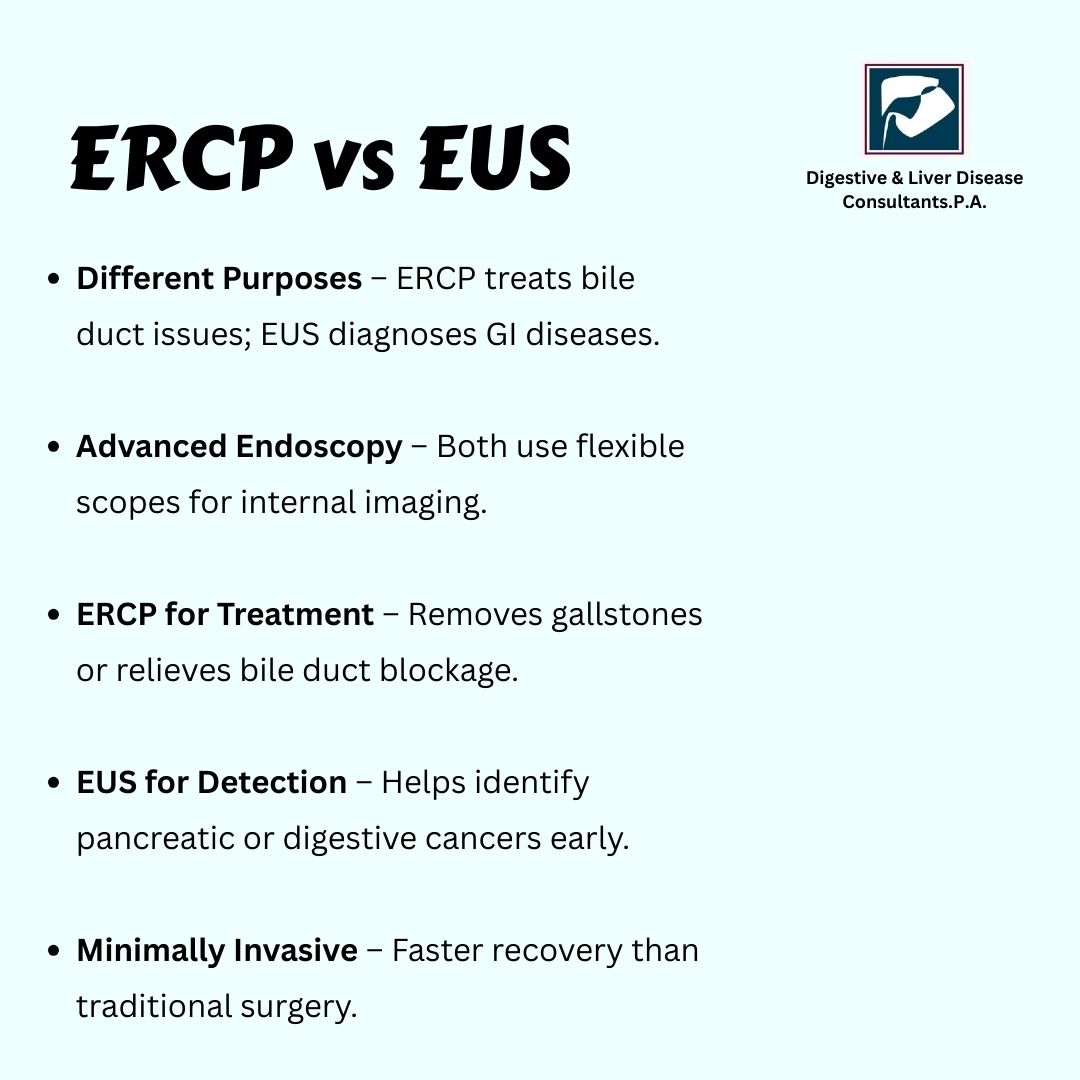
Patients often wonder about the ERCP and EUS difference. While both procedures involve endoscopy, their purposes are slightly different.
EUS is primarily used as a diagnostic tool. It provides detailed images that help identify abnormalities in the pancreas, bile ducts, and surrounding organs.
ERCP, on the other hand, is mainly used for treatment. Once a problem such as a bile duct blockage is identified, ERCP allows doctors to remove stones, place stents, or open narrowed ducts.
In many cases, EUS is performed first to identify the problem, followed by ERCP to treat it.
Conditions Diagnosed Using ERCP and EUS
These digestive endoscopy tests help diagnose a wide range of gastrointestinal conditions.
Some common conditions include:
- Gallstones blocking the bile duct
- Pancreatitis
- Bile duct infections
- Pancreatic cysts or tumors
- Chronic liver and bile duct diseases
- Digestive tract tumors
These tests play an important role in gastroenterology diagnostic procedures, especially when other imaging tests are inconclusive.
Advantages of Minimally Invasive Endoscopy
Both ERCP and EUS are considered minimally invasive GI procedures. Compared with traditional surgery, these techniques offer several benefits.
Advantages include:
- No external incisions
- Faster recovery time
- Accurate diagnosis
- Ability to treat certain conditions immediately
- Reduced hospital stay
Because of these benefits, advanced endoscopy has become an essential part of modern digestive healthcare.
ERCP Preparation and Recovery
Proper ERCP preparation and recovery help ensure the procedure is safe and effective.
Before the procedure, patients may be asked to:
- Avoid eating or drinking for several hours
- Inform the doctor about medications
- Stop certain blood thinning medications if advised
- Arrange transportation home after the procedure
The procedure is usually performed under sedation to ensure patient comfort.
After ERCP, patients may experience mild throat discomfort or bloating. Most people recover quickly and can return to normal activities within a day or two, depending on the treatment performed.
What to Expect After an EUS Procedure?
Recovery after an endoscopic ultrasound procedure is generally quick.
Patients may experience:
- Temporary throat soreness
- Mild bloating
- Drowsiness from sedation
Most patients can resume normal activities the following day unless additional treatments were performed during the procedure.
When These Procedures Are Recommended?
Your doctor may suggest ERCP or EUS if imaging tests or symptoms indicate possible digestive tract problems.
You may need these tests if you experience:
- Persistent abdominal pain
- Jaundice or yellowing of the skin
- Unexplained weight loss
- Abnormal liver tests
- Suspected pancreatic disease
- Signs of bile duct obstruction
Early evaluation helps doctors diagnose conditions sooner and begin appropriate treatment.
Why Choose Digestive & Liver Disease Consultants, P.A.?
At Digestive & Liver Disease Consultants, P.A., patients receive expert care for complex digestive conditions using modern diagnostic technologies.
Our best Gastro specialists are experienced in performing advanced endoscopy procedures, including ERCP and EUS, to diagnose and treat pancreatic, bile duct, and gastrointestinal diseases with precision.
Patients benefit from:
- Expertise in complex gastroenterology diagnostic procedures
- Access to advanced minimally invasive GI procedures
- Personalized treatment plans
- Comprehensive digestive health care
Our goal is to provide accurate diagnosis, effective treatment, and long term digestive health support for every patient.
Conclusion
Advanced procedures such as ERCP procedure and EUS endoscopic ultrasound play an important role in diagnosing and treating complex digestive conditions. These tests help doctors identify problems affecting the pancreas, bile ducts, and digestive system with high accuracy.
If you are experiencing symptoms such as persistent abdominal pain, jaundice, or suspected pancreatic disease, timely evaluation with these digestive endoscopy tests can help detect problems early and guide the right treatment.
Consult the specialists at Digestive & Liver Disease Consultants, P.A. to learn more about advanced endoscopy options and take the next step toward better digestive health.