Burping happens to everyone. It’s your body’s way of releasing excess air from the stomach. Most of the time, it’s harmless. But when burping becomes frequent, uncomfortable, or accompanied by burning in the chest, it may be a sign of something more going on beneath the surface. Many people don’t realize that burping and acid reflux are closely connected.
What Is Acid Reflux?
Acid reflux occurs when stomach acid flows back into the esophagus, the tube that carries food from your mouth to your stomach. When the protective valve at the bottom of the esophagus becomes weak or relaxes at the wrong time, digestive acids escape upward. That’s when you feel heartburn, sour taste in the mouth, or regurgitation.
Some people may not experience typical heartburn symptoms but instead feel bloating, discomfort after meals, or constant burping. This form of reflux is often overlooked.
Why Burping Happens?
Burping is simply air moving out of the stomach. It usually happens because of:
- Eating too quickly
- Drinking carbonated beverages
- Talking while eating
- Chewing gum or sucking on candy
- Smoking
- Anxiety-related air swallowing
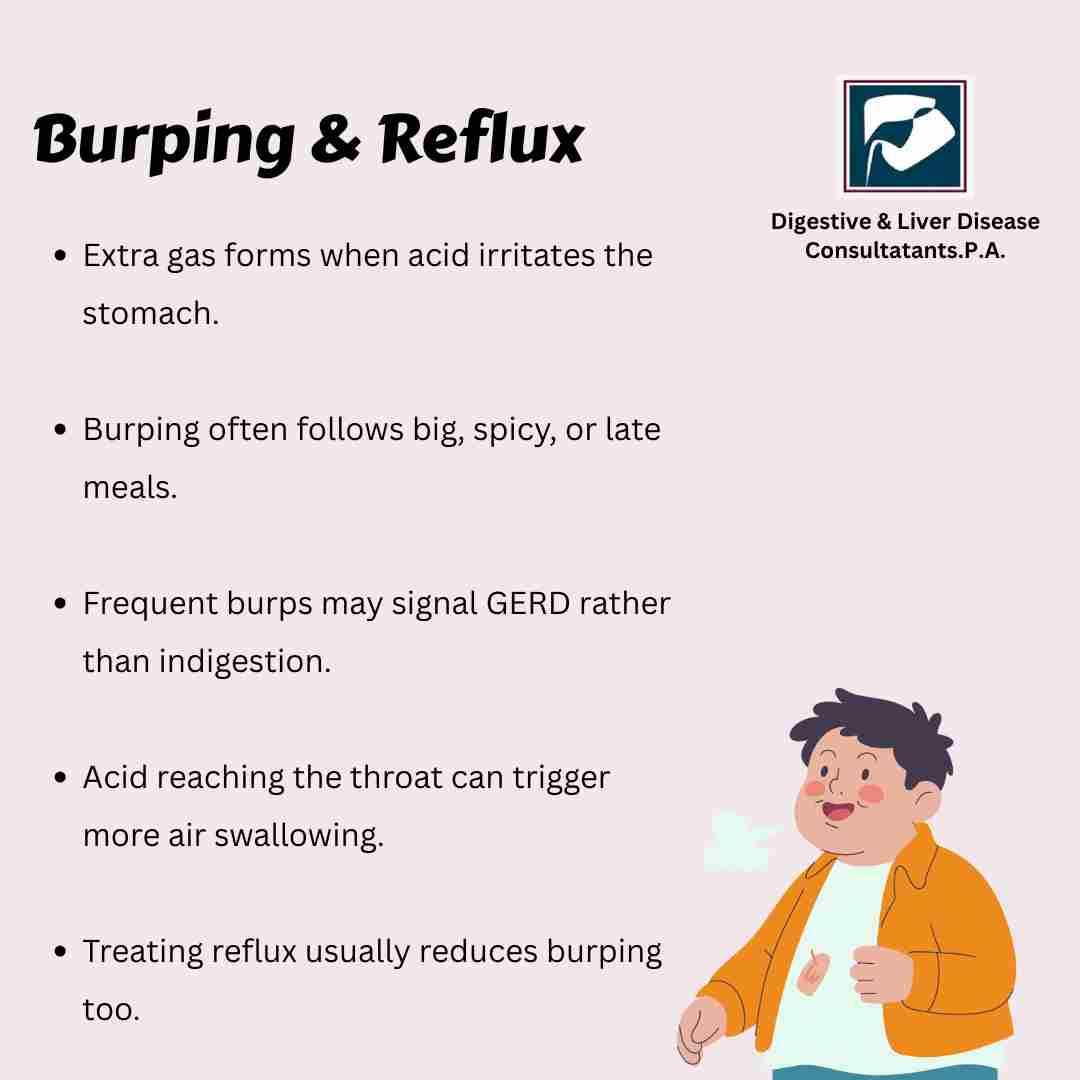
When excess air goes down, it eventually has to come up. But burping can also be triggered by acid reflux, and that’s where the connection gets interesting.
How Burping and Acid Reflux Are Linked?
When acid flows upward, the body tries to push it back down by forcing excess air or gas up instead. Burping becomes a kind of defense mechanism.
A few key reasons why reflux may lead to burping:
- Stomach acid irritates the esophagus, causing muscle reactions that bring up air.
- People with reflux often swallow more air due to discomfort.
- Gas buildup from poor digestion causes pressure that forces burping.
In some cases, every time you burp, a little acid comes with it. That’s why some people say their burps taste bitter or sour.
If burping comes with chest burning, nausea after meals, sore throat, or a lump-in-the-throat sensation, reflux might be the real issue.
Types of Burping Linked to Acid Reflux
Not all burps are the same. Doctors often look at two types:
Gastric Belching
This is the classic burp caused by swallowed air in the stomach. Common after carbonated drinks or fast eating.
Supragastric Belching
This burp starts in the throat instead of the stomach. It often happens in people with GERD because they keep swallowing air while trying to clear discomfort from the chest.
Understanding this difference helps doctors identify reflux-related burping more accurately.
When Should You Suspect Acid Reflux?
Burping alone might not signal a problem. But if the burping is paired with any of these, reflux is a strong suspect:
- Burning sensation in the chest or upper abdomen
- Sour or bitter taste in the mouth
- Frequent hiccups or throat clearing
- Bloating that gets worse after meals
- Hoarseness or chronic cough
- Food or liquid coming back up
If symptoms occur more than twice a week, it may be GERD (Gastroesophageal Reflux Disease), a chronic form of acid reflux that needs medical care.
Common Triggers That Cause Burping and Reflux Together
Your lifestyle can play a major role. A few common culprits include:
- Overeating or eating large, heavy meals
- Spicy, fatty, or acidic foods
- Caffeine, chocolate, and alcohol
- Carbonated beverages like soda
- Late-night meals
- Smoking or vaping
- Stress and anxiety
These triggers either relax the esophageal valve or increase stomach acid, making reflux worse and burping more frequent.
Digestive Conditions That May Be Involved
Sometimes burping and reflux are part of a deeper digestive issue such as:
H. pylori infection
Causes changes in stomach acid production and can lead to excessive burping.
Gastroparesis
Slow stomach emptying causes bloating and belching after meals.
Hiatal hernia
When the stomach pushes upward into the chest, acid reflux becomes more common.
Food intolerances
Dairy, gluten, and gas-forming foods can lead to air buildup.
If symptoms are frequent or worsen over time, getting evaluated by a gastroenterologist is the smartest move.
What You Can Do to Reduce Burping and Acid Reflux?
Small changes can make a big difference. Try these:
- Eat slower and chew food properly.
- Skip carbonated drinks and gas-producing foods like beans or onions.
- Avoid talking while eating to limit swallowed air.
- Don’t lie down right after meals; wait 2 to 3 hours.
- Choose lighter meals instead of oversized portions.
- Quit smoking to help strengthen the esophageal valve.
- Manage stress through relaxation techniques or physical activity.
- Wear loose clothing to prevent pressure on the stomach.
If symptoms continue even after lifestyle changes, it may be time for medical treatment.
Medical Treatments That Can Help
Digestive & Liver Disease Consultants, P.A. specialize in diagnosing and treating reflux-related symptoms. Treatment depends on the severity and underlying cause. Options include:
Acid-reducing medications
- Antacids
- H2 blockers
- Proton pump inhibitors (PPIs)
Pro-motility drugs
Help the stomach empty faster, reducing gas and pressure.
Endoscopic evaluation
To check for inflammation, ulcers, or other problems.
Testing for H. pylori
If infection is suspected, antibiotics may eliminate symptoms.
Lifestyle guidance
Tailored diet and habit modifications that protect digestive health.
When advanced GERD is present, doctors may recommend minimally invasive procedures to strengthen the esophageal valve.
When You Need to See a Doctor Immediately?
Some symptoms should never be ignored:
- Severe or constant stomach pain
- Difficulty swallowing or food getting stuck
- Vomiting blood or noticing blood in stool
- Sudden weight loss without trying
- Chest pain that mimics heart issues
These signs require urgent medical attention.
What This Really Means
Burping isn’t always innocent. If it keeps happening alongside burning in the chest, sour taste, or discomfort after meals, your digestive system may be trying to signal a reflux problem that shouldn’t be overlooked.
Conclusion
Burping is natural. But when it becomes frequent or uncomfortable, especially with heartburn or regurgitation, acid reflux is often the hidden cause. Pay attention to what your body is trying to tell you. Simple lifestyle changes can help, but if symptoms linger or disrupt daily life, talking to a gastroenterologist is the right step.
If frequent burping is bothering you, it’s worth getting checked. At Digestive & Liver Disease Consultants, P.A., our team focuses on finding the real cause and guiding you toward lasting relief. Don’t ignore what your gut is trying to tell you — book a visit with our gastroenterologist today.