Bringing a baby into the world changes your body in ways no one fully prepares you for. While most new mothers expect fatigue and hormonal shifts, fewer are warned about postpartum bowel changes. Yet digestive and bowel issues are extremely common after delivery.
Some discomfort is part of normal healing. However, certain symptoms may signal that medical evaluation is needed. Understanding the difference helps protect long term health and recovery.
Why Bowel Changes Happen After Delivery?
Your body goes through major physical stress during pregnancy and childbirth. Hormones shift dramatically. Muscles stretch. The pelvic floor weakens. Pain medications slow digestion. All of this can lead to temporary postpartum digestive issues.
Both vaginal deliveries and cesarean sections can affect bowel habits in different ways.
Constipation After Childbirth
One of the most common bowel problems after pregnancy is constipation.
Why it happens:
- Dehydration
- Iron supplements
- Pain medications
- Fear of straining after stitches
- Reduced physical activity
Constipation after childbirth may cause hard stools, bloating, and discomfort. Many women avoid bowel movements because they worry about pain or tearing, which can make the problem worse.
What helps:
- Increasing fiber gradually
- Drinking plenty of fluids
- Light walking
- Stool softeners if recommended by a physician
Mild constipation is common during recovery after vaginal delivery bowel changes, but persistent difficulty should be evaluated.
Postpartum Hemorrhoids
Pregnancy increases pressure on the rectal veins. Straining during delivery can worsen this.
Postpartum hemorrhoids may cause:
- Swelling around the anus
- Itching
- Burning
- Rectal discomfort
These can make bowel movements painful and contribute to anxiety around using the bathroom.
Most hemorrhoids improve within weeks, but severe pain or ongoing rectal bleeding after childbirth should be assessed.
Bowel Movement Pain After Delivery
Experiencing bowel movement pain after delivery is common, particularly after vaginal birth with stitches or tearing.
Pain may result from:
- Perineal stitches
- Hemorrhoids
- Swelling
- Anal fissures
If pain persists beyond several weeks or worsens, it could indicate anal fissures after pregnancy.
Anal Fissures After Pregnancy
An anal fissure is a small tear in the lining of the anus. It often develops due to hard stools or straining.
Symptoms include:
- Sharp pain during bowel movements
- Burning afterward
- Small amounts of bright red blood
Postpartum rectal pain combined with bleeding often points to fissures rather than hemorrhoids.
Early treatment prevents chronic issues.
Rectal Bleeding After Childbirth
Small streaks of blood may occur with hemorrhoids or fissures. However, ongoing or heavy rectal bleeding after childbirth should never be ignored.
Seek evaluation if:
- Bleeding continues beyond a few weeks
- Blood appears mixed in stool
- Pain is severe
- You feel lightheaded
It is important to rule out more serious causes while ensuring proper healing.
Pelvic Floor Dysfunction Postpartum
The pelvic floor muscles support the bladder, uterus, and rectum. Pregnancy and delivery can weaken these muscles.
Pelvic floor dysfunction postpartum may lead to:
- Difficulty controlling gas
- Sensation of incomplete bowel movements
- Straining
- Rectal pressure
In some cases, muscle weakness leads to stool incontinence after delivery, which can be emotionally distressing.
Pelvic floor therapy is highly effective and should not be delayed if symptoms arise.
Stool Incontinence After Delivery
Loss of bowel control is less common but can occur after severe tearing or nerve injury during childbirth.
Stool incontinence after delivery may present as:
- Leakage without warning
- Difficulty controlling bowel urgency
- Staining in underwear
This is not something women should feel embarrassed about. Early evaluation improves recovery outcomes.
C-Section Bowel Problems
Many assume cesarean delivery avoids bowel complications. That is not always true.
C-section bowel problems often include:
- Slowed digestion due to anesthesia
- Gas pain
- Constipation
- Delayed first bowel movement
Abdominal surgery temporarily reduces gut motility, making early bowel movements uncomfortable.
Walking, hydration, and gradual diet progression support healing.
What Is Normal During Postpartum Recovery?
Some degree of bowel change is expected during postpartum recovery symptoms.
Common temporary changes include:
- Mild constipation
- Occasional hemorrhoids
- Temporary bloating
- Mild discomfort during bowel movements
These usually improve within several weeks as the body heals.
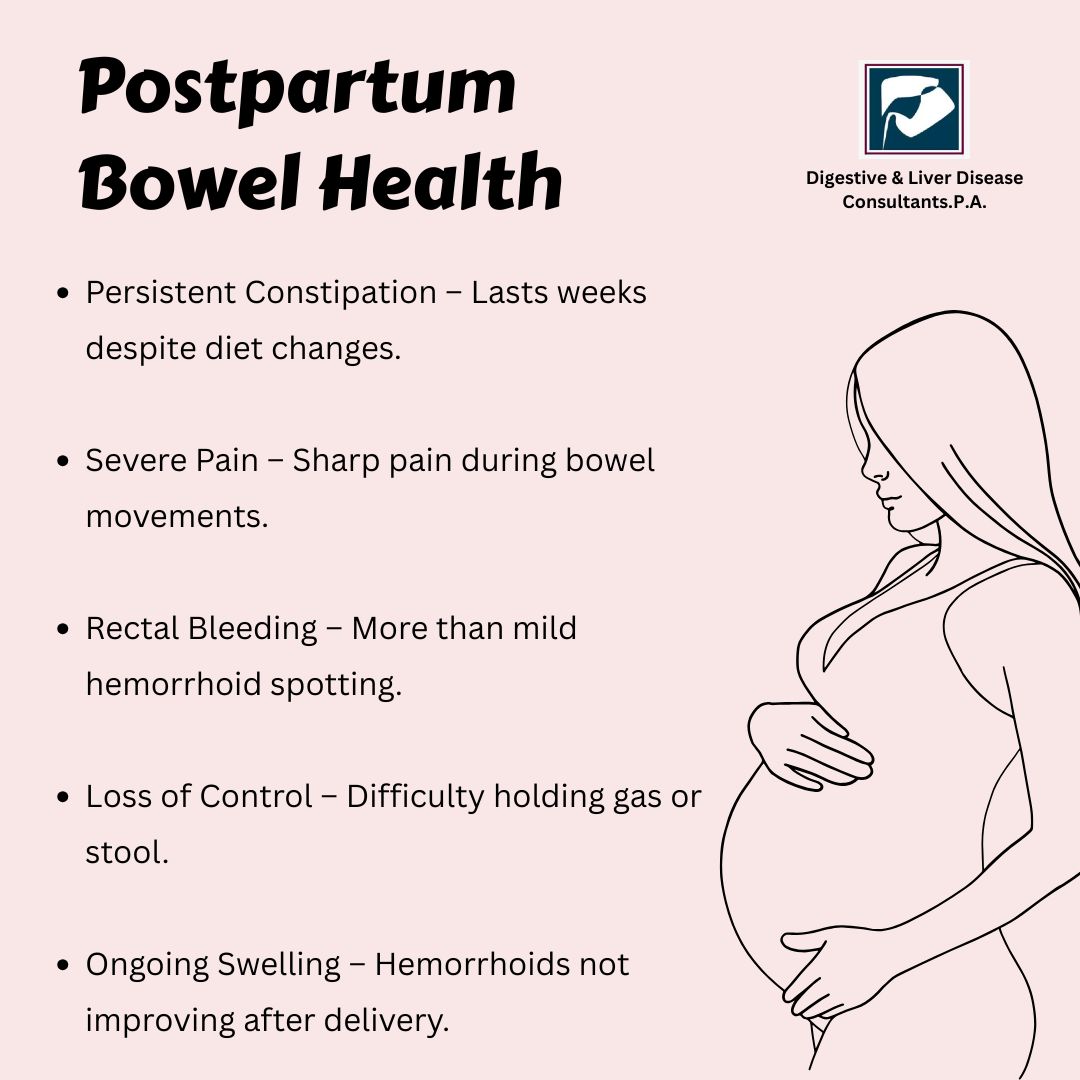
When to See a Doctor After Childbirth?
Knowing when to see a doctor after childbirth is critical.
Seek medical care if you experience:
- Severe or persistent postpartum rectal pain
- Ongoing rectal bleeding after childbirth
- Fever along with bowel symptoms
- Inability to pass stool for several days
- Persistent stool incontinence after delivery
- Severe abdominal pain
- Symptoms lasting longer than six weeks
Do not assume everything is “just part of recovery.” Persistent symptoms deserve evaluation.
Supporting Healthy Bowel Recovery
You can take steps to support healing and minimize postpartum bowel changes.
Helpful habits include:
- Staying well hydrated
- Eating fiber rich foods
- Walking daily
- Avoiding excessive straining
- Using sitz baths for comfort
- Following medical advice regarding stool softeners
Gentle care during early recovery reduces complications.
Why Choose Digestive & Liver Disease Consultants, P.A.?
Postpartum bowel concerns require sensitivity and expertise. Digestive & Liver Disease Consultants, P.A. provides compassionate, specialized care for women experiencing bowel problems after pregnancy.
Patients benefit from:
- Expert evaluation of hemorrhoids, fissures, and rectal pain
- Advanced diagnostic tools for persistent bleeding
- Treatment for pelvic floor dysfunction postpartum
- Management of chronic constipation
- Supportive care in a respectful environment
Their team understands that postpartum recovery involves more than routine checkups. Addressing digestive health is an essential part of complete healing.
Conclusion
Changes in bowel habits after childbirth are common. However, ongoing pain, bleeding, or incontinence are not issues you should ignore.
Understanding postpartum bowel changes, recognizing warning signs, and knowing when to see a doctor after childbirth can prevent long term complications.
Your recovery matters. If you are experiencing persistent postpartum digestive issues, seek professional evaluation and support.
If you are facing discomfort, bleeding, or bowel control issues after delivery, consult our top gastro specialist at Digestive & Liver Disease Consultants, P.A. Early care can restore comfort, confidence, and peace of mind during your postpartum recovery.