Digestive symptoms are common. Most issues such as mild constipation or occasional hemorrhoids can be managed with conservative treatment. But sometimes symptoms signal something more serious. The question many patients ask is simple: when to see a colorectal surgeon?
A colorectal surgeon is a highly trained digestive tract specialist who focuses on diseases of the colon, rectum, and anus. These specialists manage both common and complex colon and rectal disorders, offering medical and surgical solutions when necessary.
Persistent Rectal Bleeding
One of the most common warning signs is rectal bleeding. While hemorrhoids are a frequent cause, not all bleeding is harmless.
Possible rectal bleeding causes include:
- Hemorrhoids
- Anal fissures
- Inflammatory bowel disease
- Polyps
- Colorectal cancer
If bleeding is recurrent, heavy, or accompanied by pain or weight loss, it is time to consider evaluation by a specialist. Ignoring bleeding delays diagnosis and can allow serious conditions to progress.
Chronic Anal Pain
Occasional discomfort may resolve with simple treatment. However, chronic anal pain that lasts weeks or keeps returning should not be overlooked.
Persistent pain may indicate:
- Severe hemorrhoids
- Anal fissures
- Infection
- Abscess
- Nerve related issues
A colorectal specialist can accurately diagnose the underlying cause and recommend targeted therapy.
Severe Hemorrhoids That Do Not Improve
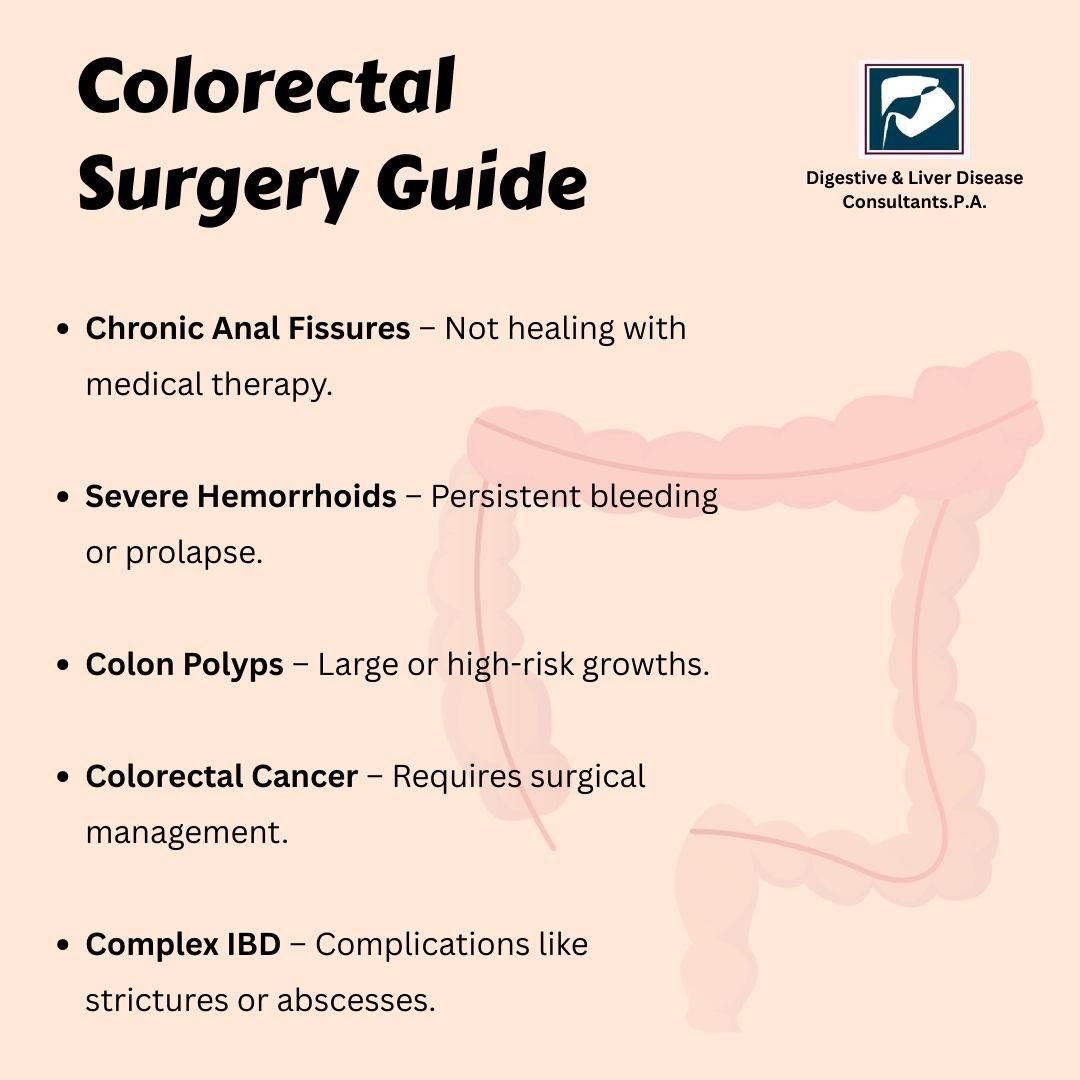
Hemorrhoids are common, but not all require surgery. That said, when symptoms become severe or do not respond to medications and lifestyle changes, it may be time to explore severe hemorrhoids treatment options.
Signs you may need advanced care include:
- Ongoing bleeding
- Prolapse that does not retract
- Significant pain
- Recurrent thrombosed hemorrhoids
In such cases, advanced hemorrhoid surgery may provide long term relief and prevent complications.
Painful Anal Fissures That Do Not Heal
Anal fissures are small tears in the lining of the anus. Most heal with conservative care. However, persistent fissures may require evaluation by an anal fissure specialist.
Symptoms include:
- Sharp pain during bowel movements
- Bleeding
- Burning sensation
- Fear of passing stool due to pain
Chronic fissures may require procedural treatment to improve blood flow and promote healing.
Fistula and Abscess Treatment
An anal abscess is a painful infection near the anus. If untreated, it can develop into a fistula, which is an abnormal tunnel connecting the anal canal to the skin.
Signs include:
- Severe pain
- Swelling
- Fever
- Drainage
Prompt fistula and abscess treatment is essential. Surgical intervention is often necessary to fully resolve the condition and prevent recurrence.
Persistent Bowel Changes
Changes in bowel habits can be an early warning sign of serious disease.
Watch for:
- Diarrhea lasting more than a few weeks
- New onset constipation
- Narrow stools
- Feeling of incomplete emptying
These persistent bowel changes may indicate inflammation, structural blockage, or even malignancy. A colorectal surgeon can evaluate structural causes and determine appropriate next steps.
Symptoms Suggesting Colorectal Cancer
Early detection of colorectal cancer dramatically improves outcomes. Certain colorectal cancer symptoms require urgent evaluation.
These include:
- Unexplained weight loss
- Ongoing rectal bleeding
- Persistent abdominal pain
- Fatigue related to anemia
- A new rectal mass
If you notice these colorectal surgery signs, do not delay seeking specialist care.
Rectal Lump Evaluation
Feeling or noticing a mass near the rectum should always prompt medical evaluation.
A rectal lump evaluation helps determine whether the mass is:
- A hemorrhoid
- A cyst
- A polyp
- An abscess
- A tumor
Accurate diagnosis ensures appropriate treatment and peace of mind.
Bowel Obstruction Symptoms
A bowel obstruction is a serious medical condition that may require surgical treatment.
Bowel obstruction symptoms include:
- Severe abdominal pain
- Vomiting
- Inability to pass stool or gas
- Abdominal distention
These symptoms demand immediate medical attention. A colorectal surgeon plays a critical role in diagnosis and management.
Inflammatory and Structural Colon Conditions
Some colon and rectal disorders require surgical expertise, particularly when medical therapy is not enough.
Examples include:
- Complicated diverticulitis
- Crohn’s disease affecting the colon
- Ulcerative colitis with complications
- Large colon polyps
- Rectal prolapse
A colorectal surgeon collaborates with gastroenterologists to provide comprehensive care.
What Happens During a Colorectal Surgeon Consultation?
During a colorectal surgeon consultation, the specialist will:
- Review medical history
- Perform a focused physical exam
- Recommend imaging or endoscopy if needed
- Discuss medical and surgical treatment options
The goal is not always surgery. Many patients benefit from non surgical management guided by a specialist.
Why Choose Digestive & Liver Disease Consultants, P.A. for Colorectal Care?
At Digestive & Liver Disease Consultants, P.A., patients receive expert, specialized care for colon and rectal conditions. Our experienced team provides accurate diagnosis, advanced treatment options, and personalized care plans tailored to each patient’s needs.
We focus on early detection, minimally invasive techniques when appropriate, and long term digestive health. With a compassionate, patient centered approach, we ensure you feel informed, comfortable, and confident in your treatment.
Schedule your consultation today for trusted colorectal care.
When to See a Colorectal Surgeon?
You should seek specialist care if you experience:
- Ongoing rectal bleeding
- Chronic anal pain
- Recurrent abscess
- Persistent bowel changes
- Suspicious rectal lumps
- Symptoms of bowel obstruction
Early evaluation prevents complications and improves treatment success.
Why Specialized Care Matters?
Colorectal surgeons receive advanced training in both open and minimally invasive surgical techniques. Their expertise allows for precise diagnosis and effective treatment of complex anorectal and colon conditions.
When symptoms persist or worsen, relying on a trained digestive tract specialist ensures accurate assessment and timely intervention.
Conclusion
Digestive symptoms are not always minor. While many conditions are manageable with conservative care, certain warning signs indicate the need for specialized evaluation.
Understanding when to see a colorectal surgeon can prevent delays in diagnosis and reduce the risk of complications. Persistent bleeding, chronic anal pain, severe hemorrhoids, bowel obstruction symptoms, and unexplained bowel changes all warrant attention.
Seeking early care leads to better outcomes and greater peace of mind.
Consult Our Top Gastro Specialist
If you are experiencing symptoms related to the colon or rectum, schedule a colorectal surgeon consultation today. Our expert team provides comprehensive evaluation and advanced treatment options tailored to your needs.
Do not ignore persistent symptoms. Early specialist care can make all the difference in protecting your digestive health.