
Pancreatitis is more than just a painful inflammation of the pancreas. This small organ plays two major jobs. It helps digest food and controls blood sugar through insulin production. When pancreatitis becomes recurrent or long lasting, the pancreas can lose its ability to manage these tasks. That is where the risk of diabetes comes in.
What Happens in Pancreatitis?
The pancreas produces digestive enzymes and hormones such as insulin. Normally those enzymes activate only when food reaches the intestine. In pancreatitis they activate too early and start attacking the pancreas itself.
There are two main types:
- Acute pancreatitis
- Chronic pancreatitis
Acute pancreatitis can show up suddenly and may go away if treated properly. Chronic pancreatitis is a long term issue that leads to permanent damage, scarring, and loss of function.
How Pancreatitis Affects Blood Sugar Control?
Insulin is produced by special pancreatic cells called beta cells. When the pancreas becomes inflamed repeatedly or severely damaged, those cells weaken or die. Without enough insulin, blood sugar rises and diabetes can develop.
This type of diabetes is sometimes called Type 3c diabetes or pancreatogenic diabetes because it results from pancreatic disease rather than typical autoimmunity or insulin resistance.
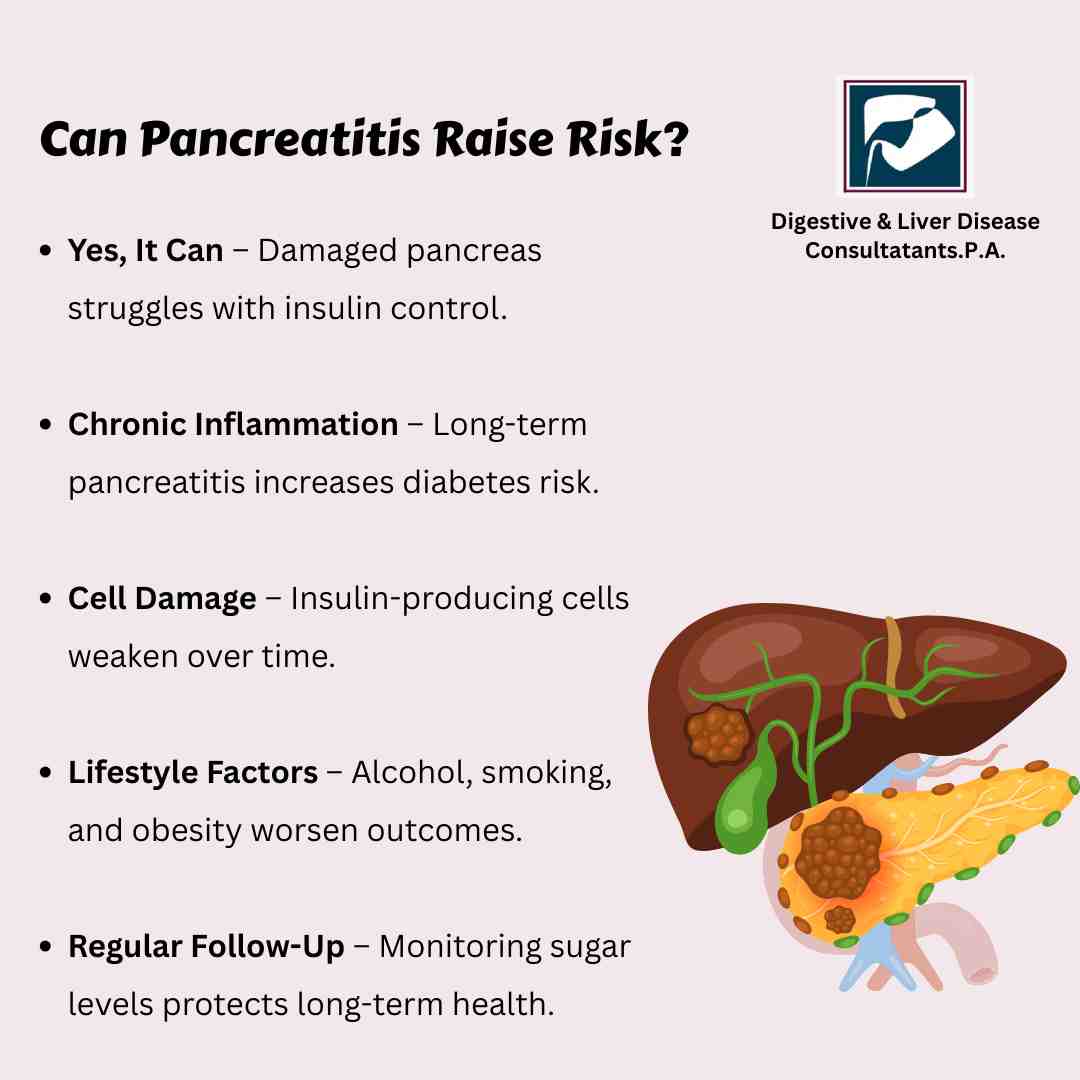
Why Diabetes Risk Increases?
Here are the key ways pancreatitis raises diabetes risk:
- Damage to insulin producing cells
- Scarring of pancreatic tissue that reduces hormone function
- Poor digestive ability that affects nutrient absorption and metabolism
- Ongoing inflammation that disrupts normal hormone signaling
- Lifestyle risks like alcohol use and smoking that harm the pancreas
The longer the inflammation lasts, the greater the risk. People with chronic pancreatitis face the highest chances of developing diabetes.
Who Is Most at Risk?
Not everyone with pancreatitis develops diabetes, but some factors increase vulnerability:
- Repeated episodes of acute pancreatitis
- Chronic pancreatitis from alcohol use
- Autoimmune pancreatitis
- Genetic conditions affecting the pancreas
- Obesity and metabolic disorders
- Pancreatic surgery or injury
- Pancreatic cancer
Addressing these risks early helps preserve pancreatic function.
Signs of Diabetes in Someone With Pancreatitis
The symptoms might be subtle at first or overlap with digestive issues. Common signs include:
- Excessive thirst
- Frequent urination
- Increased hunger
- Fatigue
- Blurry vision
- Unexplained weight loss
- Slow healing of wounds
Anyone with pancreatitis who notices these changes should talk to a gastroenterologist or endocrinologist as soon as possible.
How Doctors Diagnose Pancreatitis Related Diabetes
To understand how the pancreas is functioning, doctors may use:
- Blood tests to measure glucose and pancreatic enzymes
- Imaging scans such as CT or MRI
- Tests for digestion problems like fat in stool
- HbA1c levels to monitor average blood sugar
A digestive specialist and diabetes care team usually work together to create the best plan.
Managing Diabetes Linked to Pancreatitis
This type of diabetes can behave differently than Type 1 or Type 2. Blood sugar may swing up and down more quickly because the pancreas may struggle to release not only insulin but also glucagon, a hormone that raises blood sugar when needed.
Treatment may include:
1. Insulin therapy
Often required because the pancreas cannot make enough insulin.
2. Pancreatic enzyme replacement
Helps the digestive system absorb nutrients properly.
3. Nutrition guidance
A dietitian can help balance fiber, protein, and healthy fats for easier digestion and stable glucose levels.
4. Avoiding alcohol
Alcohol aggravates pancreatitis and worsens diabetes control.
5. Managing pain safely
Chronic pain can influence diet, sleep, and physical activity. Doctors can guide safe pain management.
6. Regular monitoring
Frequent checkups help detect changes early and maintain strong control.
Can Diabetes Be Prevented in Pancreatitis
The goal is to protect the pancreas as much as possible. Early action makes a real difference.
Helpful strategies include:
- Quit smoking
- Avoid or limit alcohol entirely
- Maintain a healthy weight
- Treat high triglycerides and gallbladder issues
- Follow a diet that supports digestive health
- Manage blood pressure and cholesterol
- Take prescribed medications consistently
- Keep follow up appointments with your care team
Protect the pancreas today and reduce complications tomorrow.
Possible Complications If Both Conditions Coexist
When pancreatitis and diabetes occur together, there are added concerns:
- Malnutrition due to poor absorption
- Low blood sugar episodes
- Higher risk of infections
- Nerve and kidney issues over time
- Increased risk of pancreatic cancer in chronic inflammation cases
This is why early diagnosis and long term medical care are important.
Life With Pancreatitis and Diabetes
You can live a full, active life with the right support. Many people learn how to manage their diet, take enzymes or insulin if needed, and adjust their lifestyle. Staying in touch with specialists ensures stability and fewer flare ups.
A helpful mindset is to focus on progress rather than perfection. Even small improvements in diet and habits can protect pancreatic function.
The Bottom Line
Yes. Pancreatitis can increase the risk of diabetes. The more the pancreas becomes damaged, the harder it is to keep blood sugar in a healthy range. But the story does not end there. With early care, lifestyle changes, and ongoing support, many people successfully prevent diabetes or keep it well controlled.
If your pancreas has been through inflammation, do not wait for blood sugar problems to show up. Monitoring, prevention, and timely treatment can protect your long term health.
Conclusion
The pancreas plays a powerful role in both digestion and blood sugar control. When pancreatitis disrupts that balance, diabetes becomes a real possibility. Awareness is the first step. Prevention and proactive care are the next. By working closely with a knowledgeable gastroenterology team, you can reduce risks, prevent complications, and stay in charge of your health.
If you have experienced pancreatitis or are noticing signs of diabetes, Digestive & Liver Disease Consultants, P.A. can help you get the clarity and care you need. Our specialists offer expert diagnosis, advanced treatment, and personalized support for every step of your digestive and endocrine health. Book an appointment today and protect your future wellness with confidence.