Most people expect stress to affect their mood, sleep, or energy levels, but many don’t realize how strongly it impacts the digestive system. The gut and the brain are deeply connected. When stress rises, the gut reacts immediately. For some, that reaction shows up as cramping. For others, it’s bloating, gas, indigestion, or even sudden stomach pain. If you’ve ever felt your stomach twist during a tense moment, you’ve already experienced this connection firsthand.
How Stress Triggers Digestive Symptoms?
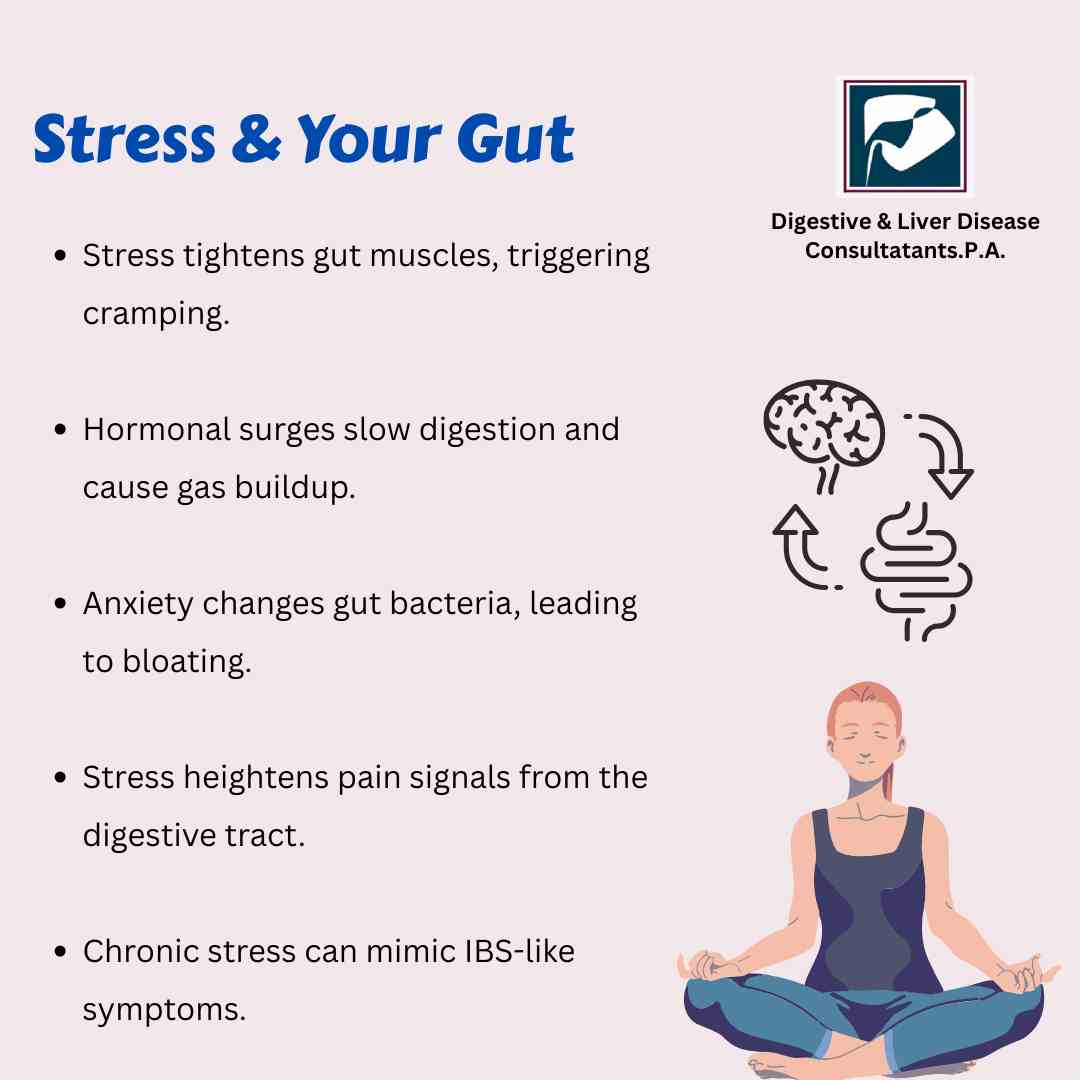
Your body has a built in stress response. When something feels overwhelming, the brain sends out signals that activate nerves, hormones, and inflammatory chemicals. These changes prepare the body for action, but they also disrupt normal digestive function.
Here’s what happens inside your gut during stress.
- The digestive process slows down
- Stomach acid levels fluctuate
- The intestines become more sensitive
- The muscles around the gut tighten
- Gas moves differently through the intestines
Even if you eat healthy, these internal changes can lead to pain, bloating, or discomfort.
Why Stress and Digestion Are So Closely Connected
The gut and brain communicate constantly through a pathway called the gut brain axis. This connection works like a two way messaging system. The brain affects digestion, and the gut affects emotions. When stress hits, the brain sends signals that alter gut movement, gut bacteria, and sensitivity to pain.
People with anxiety, sleep problems, or high pressure routines often notice their digestive issues get worse during stressful periods. Even short term stress can trigger symptoms within minutes.
How Stress Causes Abdominal Pain
Abdominal pain linked to stress usually comes from changes in gut movement and increased sensitivity. Stress can tighten the muscles in the intestines, causing cramps. It can also speed up or slow down bowel movements, leading to symptoms that feel like indigestion or discomfort.
Some people feel a sharp, momentary pain. Others experience a dull ache that lingers for hours. Many notice the pain gets worse after eating because the gut is already sensitive.
How Stress Leads to Bloating?
Bloating happens when gas gets trapped in the digestive tract. Stress disrupts the normal movement of gas through the intestines. It can cause:
- Slower digestion
- Swallowing more air due to fast breathing
- Imbalance in gut bacteria
- Increased sensitivity to pressure
Even a small amount of gas can feel painful when stress makes the gut more reactive. This is why bloating during stressful periods feels unusually intense.
When Stress Makes Existing Conditions Worse?
If you have an underlying digestive condition, stress can intensify your symptoms. Conditions that are especially sensitive to emotional stress include:
- irritable bowel syndrome
- acid reflux
- gastritis
- indigestion
- ulcerative colitis or Crohns disease
- functional bloating
- chronic constipation
During stressful phases, symptoms can flare up more often or feel more severe than usual.
Common Signs That Stress Is Affecting Your Digestion
Watch for patterns that link your digestive issues to stressful moments or periods.
- stomach pain during arguments, deadlines, or pressure situations
- bloating that appears suddenly without food being the cause
- increased gas during emotional stress
- nausea when feeling anxious
- urge to use the restroom soon after stress hits
- tightness in the abdomen
- feeling full even after small meals
These patterns are strong clues that your symptoms are stress related.
How Long Do Stress Related Symptoms Last
For some people, the discomfort settles within an hour once the stress passes. For others, the digestive system takes longer to settle, sometimes a few hours or even a full day. If stress is chronic, the symptoms may become frequent and feel unrelated to emotional triggers, even though the gut is still reacting to long term tension.
How To Reduce Stress Related Abdominal Pain and Bloating
You don’t need big lifestyle changes to help your gut calm down. Small habits make a big difference.
- eat slowly and chew well to reduce swallowed air
- add short, daily movement like walking to boost digestion
- stay hydrated
- avoid heavy meals during stressful moments
- practice deep breathing to relax gut muscles
- limit caffeine when you feel tense
- get enough sleep to stabilize stress hormones
- try warm compresses for abdominal comfort
If digestive symptoms disappear when stress reduces, the gut brain connection is the likely cause.
When To Seek Medical Help
Stress can explain a lot, but it’s important to rule out other causes if symptoms are persistent or severe. Seek help if you notice:
- pain that lasts for several days
- weight loss you cannot explain
- vomiting
- blood in stool
- pain waking you at night
- ongoing bloating that doesn’t improve
- frequent changes in bowel habits
A specialist can help determine whether stress is the main trigger or if another digestive issue needs treatment.
Final Thought
Stress affects far more than your emotions. It directly influences how your digestive system works, often leading to abdominal pain, bloating, and discomfort. Understanding this connection helps you take control and manage symptoms more effectively. When you learn to support both your mind and your gut, your digestive wellness improves significantly.
Need Expert Digestive Care
If your symptoms keep returning or you’re unsure whether stress or a medical condition is causing your discomfort, the team at Digestive and Liver Disease Consultants P.A. is here to help.
Our Gastro specialists offer accurate diagnosis, personalized guidance, and effective treatment plans for long term digestive relief.
Book your appointment today and get clarity about your gut health.