Irritable Bowel Syndrome, commonly known as IBS, is a chronic digestive condition that affects how the gut functions. For many people, IBS becomes a daily challenge marked by bloating, abdominal pain, gas, diarrhea, constipation, or a mix of both. While medications can help manage symptoms, not everyone wants to rely on them long term.
IBS management does not always start with pills. In many cases, lifestyle changes, dietary adjustments, and stress management play a powerful role in reducing symptoms and improving quality of life.
Understanding IBS and Its Triggers
IBS is a functional gastrointestinal disorder. This means the digestive tract looks normal but does not function as it should. The exact cause of IBS is not fully understood, but common triggers include
- Certain foods
- Stress and anxiety
- Hormonal changes
- Gut sensitivity
- Disruption in gut bacteria
Symptoms vary from person to person, which is why a personalized approach matters.
Focus on Diet First
Diet plays a central role in IBS management. What you eat, how much you eat, and how fast you eat all affect gut function.
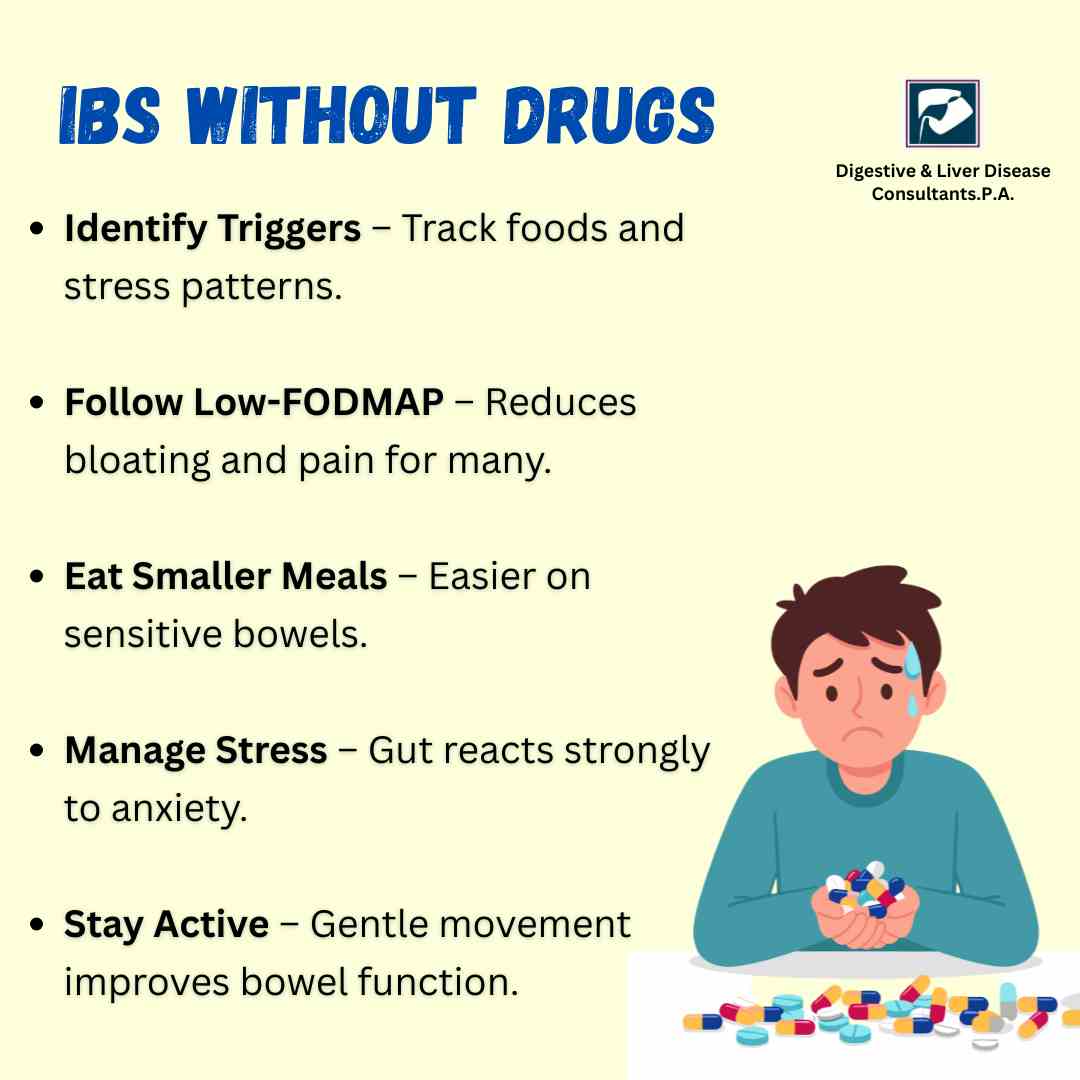
Identify Trigger Foods
Many people with IBS notice symptom flare ups after eating specific foods.
Common triggers include:
- Spicy foods
- Fried or fatty foods
- Dairy products
- Caffeine
- Carbonated drinks
- Artificial sweeteners
Keeping a food and symptom diary helps identify personal triggers rather than eliminating foods blindly.
Try a Low FODMAP Approach
FODMAPs are certain carbohydrates that are poorly absorbed in the gut and can cause gas, bloating, and pain.
High FODMAP foods include:
- Onions and garlic
- Beans and lentils
- Wheat products
- Certain fruits like apples and pears
- Milk and soft cheeses
A structured low FODMAP diet, followed under medical guidance, can significantly reduce symptoms for many IBS patients.
Eat Smaller, Regular Meals
Large meals put extra stress on the digestive system. Eating smaller meals at regular intervals helps maintain steady digestion and reduces cramping and bloating.
Improve Gut Health Naturally
Increase Fiber Carefully
Fiber helps regulate bowel movements, but not all fiber works the same way.
- Oats
- Psyllium husk
- Chia seeds
- Bananas
- Cooked vegetables
Insoluble fiber, found in raw vegetables and bran, may worsen symptoms for some people. Gradual introduction is key.
Stay Well Hydrated
Adequate water intake supports digestion and helps prevent constipation. Drinking water throughout the day is more effective than consuming large amounts at once.
Support Healthy Gut Bacteria
Gut bacteria influence digestion and gut sensitivity. While not all probiotics work for everyone, certain strains may help balance the gut.
Natural ways to support gut health include:
- Eating fermented foods in moderation
- Reducing highly processed foods
- Maintaining regular eating patterns
Manage Stress and the Gut Brain Connection
The gut and brain communicate constantly. Stress does not cause IBS, but it can significantly worsen symptoms.
Practice Stress Reduction Techniques
Helpful techniques include
- Deep breathing exercises
- Yoga or gentle stretching
- Meditation or mindfulness
- Regular physical activity
Even short daily relaxation routines can calm the digestive system.
Prioritize Quality Sleep
Poor sleep disrupts gut function and increases pain sensitivity. Maintaining a regular sleep schedule supports both mental and digestive health.
Physical Activity Matters
Regular movement helps regulate bowel movements and reduce bloating.
Recommended activities include
- Walking
- Swimming
- Cycling
- Light strength training
High intensity workouts may worsen symptoms for some individuals, so listening to your body is important.
Establish Healthy Bowel Habits
Simple habits can reduce IBS flare ups
- Do not ignore the urge to pass stool
- Avoid straining during bowel movements
- Sit comfortably and allow enough time
- Maintain consistent meal timings
Routine supports regular bowel activity.
When Non Medication Management Works Best
Non medication strategies are especially effective for
- Mild to moderate IBS
- Stress related symptom flare ups
- Long term symptom control
- Patients seeking lifestyle focused care
However, persistent or worsening symptoms still require medical evaluation.
When to Seek Medical Advice
You should consult a specialist if:
- Symptoms interfere with daily life
- There is unexplained weight loss
- Blood appears in stool
- Pain is severe or persistent
- Symptoms begin later in life
These signs may indicate conditions other than IBS that need further testing.
Why Choose Digestive & Liver Disease Consultants, P.A.?
Managing IBS requires more than trial and error. Digestive & Liver Disease Consultants, P.A. provides expert, patient centered care focused on identifying triggers and creating effective management plans.
Why patients trust our team
- Board certified gastroenterologists
- Expertise in functional digestive disorders
- Personalized diet and lifestyle guidance
- Advanced diagnostic evaluation when needed
- Emphasis on long term gut health
We help patients understand their condition and take control of symptoms without unnecessary medications whenever possible.
Conclusion
IBS can feel frustrating and unpredictable, but it does not have to control your life. Many people successfully manage IBS symptoms through thoughtful dietary changes, stress management, healthy routines, and improved gut care.
Non medication strategies work best when guided by expert evaluation and tailored to individual needs. Listening to your body and seeking the right support makes all the difference.
If you are struggling with IBS symptoms and want a natural, sustainable management plan, consult our top gastro specialist at Digestive & Liver Disease Consultants, P.A. Our team will help you identify triggers, improve gut health, and regain confidence in your daily life. Schedule your appointment today and take the next step toward better digestive wellness.