Heartburn is a common problem that affects millions of people. Most experience it occasionally, especially after heavy meals, spicy food, or alcohol. While occasional heartburn is usually harmless, persistent acid reflux can signal an underlying condition that requires medical attention. Understanding when to seek help, what symptoms to watch for, and the risks of untreated reflux is essential for long-term digestive health.
What Is Heartburn and Why It Happens?
Heartburn occurs when stomach acid flows back into the esophagus, irritating its lining and causing a burning sensation in the chest or throat. This is sometimes referred to as acid reflux. If this happens frequently, it may indicate gastroesophageal reflux disease (GERD), a condition that can cause long-term damage if left unmanaged.
Reflux disease symptoms often include:
- Burning sensation in the chest or throat
- Sour or bitter taste in the mouth
- Regurgitation of food or liquid
- Difficulty swallowing
- Chronic cough, hoarseness, or sore throat
If these symptoms occur more than twice a week, it is a sign that you may need a heartburn doctor visit for further evaluation.
Chronic Heartburn Causes
Understanding chronic heartburn causes is the first step in managing symptoms. Factors that contribute to persistent acid reflux include:
Dietary Habits – Large meals, spicy foods, citrus, chocolate, caffeine, and carbonated drinks can trigger reflux.
Obesity – Excess abdominal pressure increases the likelihood of acid moving into the esophagus.
Hiatal Hernia – A condition where part of the stomach pushes through the diaphragm, weakening the barrier to reflux.
Pregnancy – Hormonal changes and increased abdominal pressure can lead to frequent heartburn.
Certain Medications – NSAIDs, some blood pressure medications, and sedatives can aggravate acid reflux.
Lifestyle Factors – Smoking, alcohol consumption, and lying down immediately after meals worsen symptoms.
By identifying these triggers, patients can make targeted changes to reduce reflux episodes and complement medical care.
Frequent Heartburn Warning Signs
Not all heartburn is created equal. Some signs indicate more serious problems and require prompt medical attention. Frequent heartburn warning signs include:
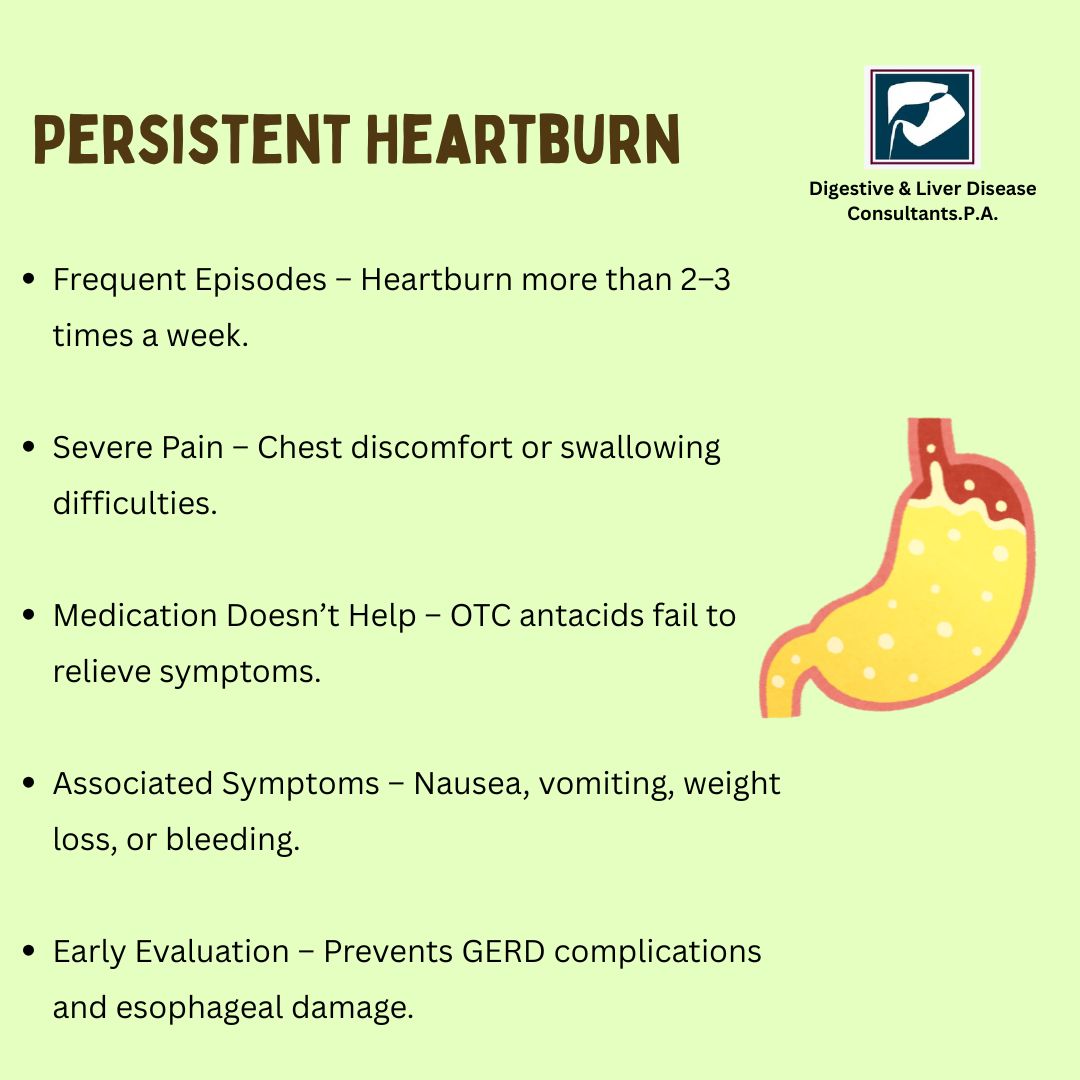
Symptoms occurring more than twice per week
- Persistent acid reflux that over-the-counter medications do not relieve
- Difficulty swallowing (dysphagia) or painful swallowing
- Vomiting or blood in vomit
- Unexplained weight loss
- Chest pain, especially if accompanied by shortness of breath or dizziness
If you notice any of these, it is time to see a gastroenterologist. Early intervention can prevent complications and help maintain quality of life.
When to See a Gastroenterologist
Many people delay medical consultation, assuming heartburn is harmless. Knowing when to see a gastroenterologist is important. Consider a specialist visit if:
- You experience persistent acid reflux for several weeks
- Over-the-counter medications fail to provide relief
- Heartburn interferes with sleep or daily activities
- You have risk factors such as obesity, smoking, or a family history of digestive disorders
- You notice alarming signs like blood in stool or difficulty swallowing
A gastroenterologist can provide a thorough acid reflux evaluation, identify the cause, and recommend effective treatment.
Risks and Complications of Untreated Heartburn
Frequent or severe heartburn can lead to acid reflux complications if ignored. Common risks include:
Esophagitis – Inflammation of the esophagus lining due to repeated acid exposure.
Esophageal Strictures – Scar tissue narrowing the esophagus, making swallowing difficult.
Barrett’s Esophagus – Precancerous changes in the esophageal lining caused by chronic acid exposure.
Increased Cancer Risk – Long-term GERD can raise the risk of esophageal adenocarcinoma.
Respiratory Issues – Acid reflux can aggravate asthma, cause chronic cough, or lead to aspiration.
Understanding long-term GERD risks emphasizes why early diagnosis and proper management are essential.
Heartburn Treatment Options
Treatment depends on the severity of symptoms, frequency, and underlying causes. Heartburn treatment options include:
1. Lifestyle Modifications
Adopting heartburn lifestyle tips can significantly reduce symptoms:
- Eat smaller, frequent meals instead of large meals
- Avoid lying down immediately after eating
- Elevate the head of the bed during sleep
- Avoid known trigger foods such as spicy, fatty, or acidic foods
- Maintain a healthy weight
- Quit smoking and reduce alcohol intake
2. Medications
When lifestyle changes are insufficient, medications may help:
- Antacids provide immediate relief for occasional symptoms
- H2 blockers reduce acid production
- Proton pump inhibitors (PPIs) are effective for frequent or severe symptoms
3. Advanced Procedures
In severe cases, a gastroenterologist may recommend:
- Endoscopic treatments to tighten the lower esophageal sphincter
- Surgical options for hiatal hernia or refractory GERD
These interventions are part of severe heartburn management when medications and lifestyle changes alone are not enough.
Chronic Indigestion Help
People with ongoing discomfort may require chronic indigestion help. This includes:
- Identifying and avoiding triggers
- Symptom monitoring
- Personalized frequent heartburn care plans
- Support for dietary, lifestyle, and stress management strategies
Professional care ensures acid reflux evaluation and prevents complications before they become severe.
Daily Habits to Reduce Reflux
Simple daily changes can complement medical treatment:
- Avoid overeating and eat slowly
- Chew food thoroughly
- Maintain a regular exercise routine
- Manage stress through mindfulness or relaxation techniques
- Keep a food and symptom diary to track triggers
These heartburn lifestyle tips are practical steps that reduce flare ups and improve quality of life.
Conclusion
Heartburn is common, but frequent, persistent, or severe symptoms should never be ignored. Recognizing frequent heartburn warning signs, understanding chronic heartburn causes, and seeking timely medical attention can prevent acid reflux complications and improve long-term health. Whether it’s through heartburn treatment options, severe heartburn management, or simple heartburn lifestyle tips, early evaluation by a gastroenterologist ensures safer, more effective care.
If you are experiencing persistent acid reflux, reflux disease symptoms, or need guidance for chronic indigestion help, consult our top gastro specialist at Digestive & Liver Disease Consultants, P.A. Our team provides comprehensive acid reflux evaluation, personalized treatment plans, and expert advice to reduce long-term GERD risks. Schedule your appointment today and take control of your digestive health.