Weight loss is often treated as a numbers game, but real, lasting weight loss starts much deeper in the body. Your gut plays a central role in how you digest food, store fat, regulate hunger, and control inflammation. When gut health is ignored, weight loss becomes harder, slower, and less sustainable.
Many people unknowingly damage their digestive system through crash diets, extreme fasting, and unverified supplements. These methods may show quick results, but they often lead to bloating, acidity, constipation, fatigue, and long term metabolic problems.
If your goal is healthy weight loss that lasts, supporting your gut must be part of the plan.
The Link Between Gut Health and Weight
Your digestive system is home to trillions of bacteria that influence how calories are absorbed and how fat is stored. An imbalance in gut bacteria can increase cravings, slow metabolism, and promote weight gain.
A healthy gut helps:
- Improve digestion and nutrient absorption
- Regulate appetite hormones like ghrelin and leptin
- Reduce inflammation linked to obesity
- Maintain stable blood sugar levels
- When gut health improves, the body responds better to dietary and lifestyle changes.
- Avoid Extreme Dieting and Rapid Weight Loss Plans
Quick weight loss plans often stress the digestive system. Skipping meals, severe calorie restriction, or prolonged fasting can slow gut movement and disrupt enzyme production.
Common digestive issues caused by extreme dieting include:
- Acidity and heartburn
- Constipation
- Bloating and gas
- Nutrient deficiencies
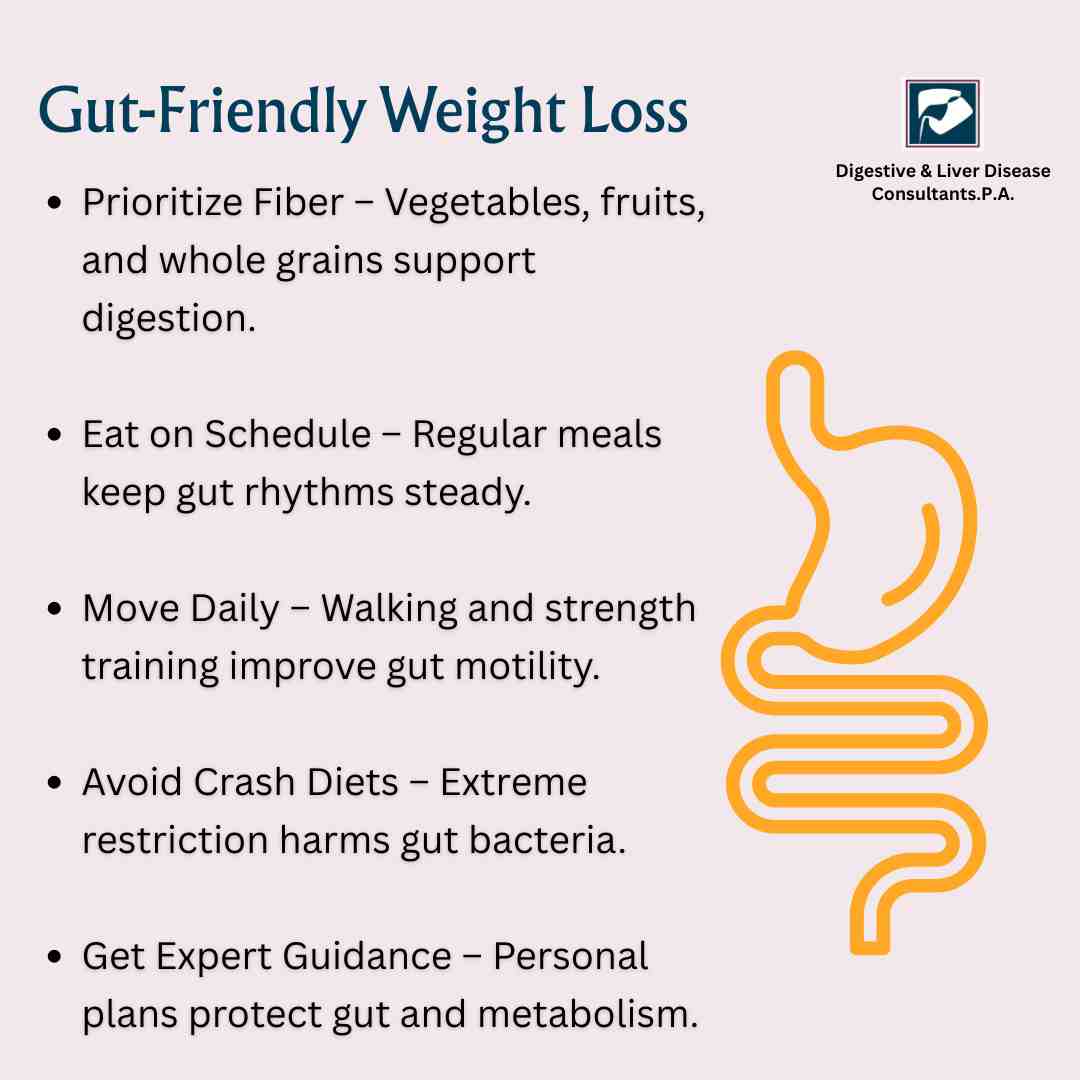
Instead of extreme restriction, aim for gradual weight loss. A slow, steady approach protects gut health and improves long term success.
Eat Regular Meals to Support Digestion
Irregular eating patterns confuse the digestive system. Eating at random times disrupts gut rhythm and leads to poor digestion.

For better gut function:
- Eat meals at consistent times
- Avoid skipping breakfast
- Keep dinner light and early
- Maintain portion control
Your gut thrives on routine. Regular meals improve digestion and help regulate hunger.
Increase Fiber Intake the Smart Way
Fiber is essential for both gut health and weight loss. It keeps you full longer and feeds beneficial gut bacteria.
Good fiber rich foods include:
- Whole grains like oats and millets
- Vegetables such as spinach, carrots, and broccoli
- Fruits like apples, pears, and berries
- Legumes including lentils and beans
Increase fiber gradually to avoid bloating. Pair fiber with adequate water intake for smooth digestion.
Include Protein in Every Meal
Protein supports muscle mass, improves satiety, and stabilizes blood sugar levels. It also helps prevent overeating.
Gut friendly protein sources:
- Eggs
- Fish
- Lean chicken
- Yogurt
- Paneer
- Pulses and legumes
Balanced protein intake supports weight loss without stressing the digestive system.
Eat Mindfully to Improve Gut Response
How you eat affects digestion just as much as what you eat. Eating too fast or while distracted increases bloating and overeating.
Healthy eating habits include:
- Chewing food thoroughly
- Eating without screens
- Taking time to finish meals
- Listening to hunger and fullness cues
Mindful eating improves digestion and reduces unnecessary calorie intake.
Support Gut Bacteria With Natural Probiotics
Healthy gut bacteria improve digestion and help regulate fat storage. Probiotics support this balance.
Natural probiotic foods include:
- Yogurt with live cultures
- Buttermilk
- Fermented foods like idli batter
Probiotics work best when combined with fiber rich foods that nourish good bacteria.
Reduce Sugar and Processed Foods
Excess sugar and refined foods disrupt gut bacteria and promote fat accumulation.
Limit:
- Sugary beverages
- Packaged snacks
- Refined flour products
- Artificial sweeteners
Replacing these with whole foods improves digestion and supports healthy weight loss.
Stay Hydrated for Better Digestion
Water plays a key role in digestion and appetite control. Dehydration often leads to constipation and mistaken hunger cues.
Healthy hydration habits:
- Drink water throughout the day
- Start the morning with warm water
- Limit excessive caffeine
Proper hydration supports gut movement and metabolism.
Choose Gut Friendly Physical Activity
Exercise improves gut motility and helps regulate appetite hormones. You do not need intense workouts to see benefits.
Effective activities include:
- Walking
- Cycling
- Swimming
- Yoga
Consistency matters more than intensity. Regular movement supports digestion and steady weight loss.
Manage Stress to Protect Gut Health
Stress directly affects digestion and weight regulation. Chronic stress increases inflammation and disrupts gut balance.
Simple stress management techniques:
- Deep breathing
- Short daily walks
- Adequate sleep
- Limiting screen time at night
Reducing stress improves gut function and supports weight control.
Sleep Well for Sustainable Weight Loss
Poor sleep disrupts appetite hormones and gut bacteria. It increases cravings and slows metabolism.
For better results:
- Maintain a regular sleep schedule
- Avoid heavy meals late at night
- Reduce caffeine intake in the evening
- Quality sleep allows the gut to repair and reset.
Avoid Unverified Weight Loss Supplements
Many weight loss supplements promise fast results but harm gut health.
Potential risks include:
- Diarrhea or constipation
- Electrolyte imbalance
- Gut irritation
- Dependency
Always consult a gastroenterologist before using supplements.
When Medical Guidance Is Necessary
Weight issues may be linked to digestive or metabolic conditions such as fatty liver disease, IBS, hormonal imbalance, or insulin resistance.
Seek medical help if you experience:
- Persistent bloating or acidity
- Chronic bowel changes
- Unexplained weight gain or loss
- Fatigue or loss of appetite
Treating the root cause leads to safer and more effective weight loss.
Conclusion
Safe weight loss is not about shortcuts. It is about supporting your gut, building healthy habits, and making sustainable lifestyle changes. When digestion improves, weight loss becomes easier and more consistent.
By focusing on gut friendly foods, regular routines, stress management, and professional care when needed, you can achieve lasting results without harming your digestive health.
If you are struggling with weight management or digestive concerns, consult the experts at Digestive & Liver Disease Consultants, P. A. Our best gastroenterologists provide personalized evaluation and treatment plans that focus on gut health and long term weight control.